GTM strategy · B2B SaaS · 1–10M ARR

Your marketing feels like throwing spaghetti?

I build GTM based on customer evidence to help B2B SaaS founders break through a plateau on their way to $10M ARR.

Because great marketing isn't invented. It's overheard.


Companies I've helped with customer research

MacPaw Publitas Fluix Weblium BotsCrew

The real problem

You've tried the tactics everyone recommends. More content. More ads. A fresh positioning doc every quarter.

Some months work. Most don't, and nothing compounds. So you change the tactic again, and the randomness just resets.

Almost all of it runs on opinions of what you think customers want. What worked for a company you admire. Whatever the loudest voice in the last meeting argued for.

Your customers already hold the answer, but almost nobody does the slow, unglamorous work of going to get it. That's the work I do.

Sound familiar?

This sprint is for you if

Your growth stalled somewhere on the way to $10M ARR, and you can't say exactly why.

You keep changing your positioning every 6 months, and it still doesn't land.

You're trying to serve every segment at once and can't keep up with any of them, but cutting one feels terrifying.

Your marketing is mostly copying competitors.

Your team quietly disagrees about who the customer even is.

You make roadmap and campaign calls on gut, then hope they were right.

The work

A 6-week customer research sprint

Six weeks. We find the customers worth winning, I run 10+ interviews myself, and we turn what they actually say into positioning, a GTM plan, and experiments you can run.

9,000

Founding-client rate of €6,000–7,000 is available now in exchange for a testimonial and permission to share the results.

After the sprint, an optional €2,000/month retainer: I keep measuring the experiments, kill what isn't working, and help you form the next round of bets.

Book a discovery call

What you walk away with

1

10+ interviews, run by me

I pick the segment with you, write the script, run the calls, and pull out the patterns. You're not buying a framework. You're buying someone to do the part nobody enjoys.

2

Positioning and an ICP you'll actually use

Built from real transcripts, not a workshop whiteboard. The kind of alignment that survives the room it was made in.

3

A searchable customer knowledge base

Recordings, transcripts, and tagged insight you can search later — instead of re-litigating from memory six months from now.

4

A Claude workspace trained on your customers

Your interviews and positioning loaded in, so your team drafts assets in your customers' language instead of guessing at it.

5

A backlog of hypotheses to test

Prioritized positioning, product, and marketing bets and a framework to keep running and measuring them after the sprint ends.

"Dmytro has extensive knowledge of how to build a comprehensive ICP framework through research and creating the corresponding messaging canvas. If you need to understand who your customer is, then Dmytro would be a great addition to any business."
Sarah Kruger
Sarah Kruger
Head of Marketing, Publitas

"It was great to have such a strong leader as Dmytro on our team. Motivated, passionate and result-oriented young man. With empathy and great people skills. But most importantly — he achieves the results. Independently."

Max Gladysh
Max Gladysh
Co-founder, BotsCrew

"Dmytro's creative prowess is unparalleled. Time and time again, he surprised our team with creative approaches and ways to solve given problems that not only captured our target audience's attention but also fostered meaningful engagement."

Ray Astafichev
Ray Astafichev
Co-Founder, Eated & Asta Corp
How it works

Six steps, six weeks

1 Align on the question

Alignment on the sprint goals

We name the one decision you're stuck on and the questions worth answering to make it. Then we scope the length based on what data you already have. No fishing expeditions.

What do we need to know?
ICP clarity Positioning Channels
2 Find the segment worth winning

Finding the segment worth scaling

We dig through your customer base to find who pays best, stays longest, and is genuinely good to work with. That segment becomes the focus. This is where the swiss-army-knife problem starts to break.

Segment analysis
Enterprise
€482K
Mid-market
€215K
SMB
€98K
72% retention €4.2K ACV 18d cycle
3 Talk to them, listen properly

10 interviews I run myself

I write the script, run the calls, transcribe, and structure the patterns: pains, triggers, and the exact words your customers use. I teach your team to run the next ones, so the engine doesn't leave when I do.

Customer interview
DB
"What was the trigger that made you go looking for something like this?"
"We hit a ceiling around €600K and realized we were guessing about who our customer even was…"
C
Pain: no ICP clarity Trigger: plateau
7/10 done
4 Build the GTM foundation

A clear ICP, decision criteria, and channels

We get a clear picture of the ICP, their decision criteria, and their buying channels. So we know who to find, what actually matters to them, and where to put your message to get noticed. These are the foundations of every GTM.

GTM foundation
Ideal customer profile
Decision criteria
Buying channels
LinkedInSearchCommunities
5 Turn it into bets you can run

An experiment log based on evidence

One or two workshops to get the team aligned on what we found, then a backlog of positioning, product, and marketing hypotheses: prioritized, measurable, and ready to test over the next few months. On retainer, we keep score together.

Hypothesis log
High
High
Med
6 Build a system that runs without me

A Claude Code system that knows your customers

I build a Claude Code system that knows everything about your project and your customers. So you can validate ideas against direct customer quotes, and create materials that stay relevant across different roles, consistently.

Claude workspace
You
"Draft a landing section for the ops persona."
"Pulling from 3 interviews. Ops leads kept saying 'I can't trust the numbers'…"
C
Grounded in quotes Per role
Why this is different

Most consultants do the last 10%. A clean landing page and an ICP doc that quietly dies in Google Drive. I do the part most people skip: talk to your customers, get the team aligned, and hand you bets you can act on.

Book a discovery call
What you're actually paying for

How I work

01

We align before taking action

We agree with key stakeholders on what we want to know and commit to acting on that data. If there's no alignment, it's just a waste of time.

02

I run the interviews

The devil is in the details of asking the right questions and listening. The uncomfortable, time-eating work is exactly the work you're hiring me for.

03

I set up systems that work without me

The Claude agent with customer insights, the experimentation frameworks. Your team can keep on going.


Who's behind this
Dmytro Belko

Hi, I'm Dmytro.

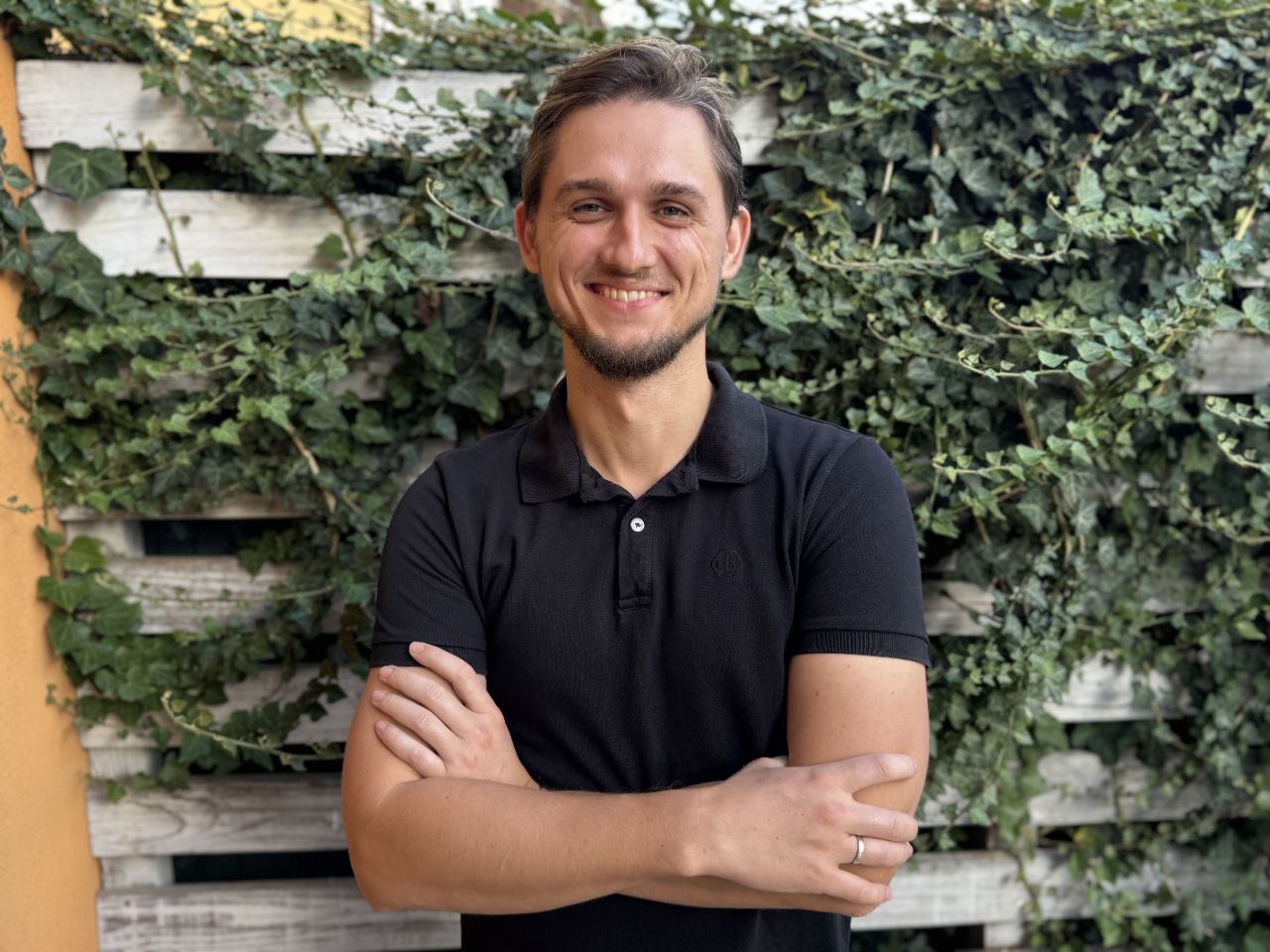
I run Good Damn Research and currently lead PMM at MacPaw. I've been working with GTM for B2B startups and scale-ups for 10 years and saw the good, the bad, and the ugly of it. From delivering 1500% ROMI to seeing positioning work dying on G-Drive. Now I want to help more founders set the foundation right and unblock growth.

10+
years in marketing
1500%
ROMI on a function I built
ACV via repositioning
faster sales cycle
100s
customer interviews run

The belief behind all of it
Marketing should be unique, but it's not built on someone's genius. It's built on deep customer understanding. The randomness you're feeling isn't a tactics problem. It's an evidence problem. Specificity breeds creativity.

Common questions

FAQ

Most consultants build positioning from your input about your customers. So the result is only as good as how well you already understand them, and that's exactly the part most teams are weakest at. Getting a clear, honest picture of your customers is the hard, nuanced job. It's harder to sell and harder to do. But done right, it's worth far more than a homepage rewrite. That's the job I take.
Access to what you know about your business and customers. I do my own research and run the first 10 interviews, but your team has to show up. Ideally, one person takes over the interviews after my 10, so the muscle stays in-house. If a critical piece of data is missing, I'll tell you where to find it.
It depends. If you're the founder with a direct relationship to the customer, better not to, as people edit their answers in front of you. If you join as "just another team member" it can work, with strict rules to keep bias out. If you want to watch without influencing, I'll set up an internal live stream.
I'll guide the selection. We want your highest-value customers who are also good to work with. The group has to be similar, because variety dilutes the signal. A focused segment beats a broad one every time.
Depends how close you are to them. With a warm relationship through customer success, 15–20 contacts usually lands 8–10 interviews. With a PLG motion and no direct contact, we might need 100–200 contacts to land 10.
Yes. If after the goal-setting and alignment phase you don't want to move forward, I give your money back.
Yes. We talk through your situation and figure out whether I'm the right person to help. No charge.
Ready when you are

Stop guessing what your customers want.

Six weeks from now, you could be making decisions off what your customers actually said, instead of what the room assumed.

9,000

Founding-client rate €6,000–7,000 in exchange for a case study. Optional €2,000/month retainer after.